What Words Are Used to Describe the Igneous Rocks Composition
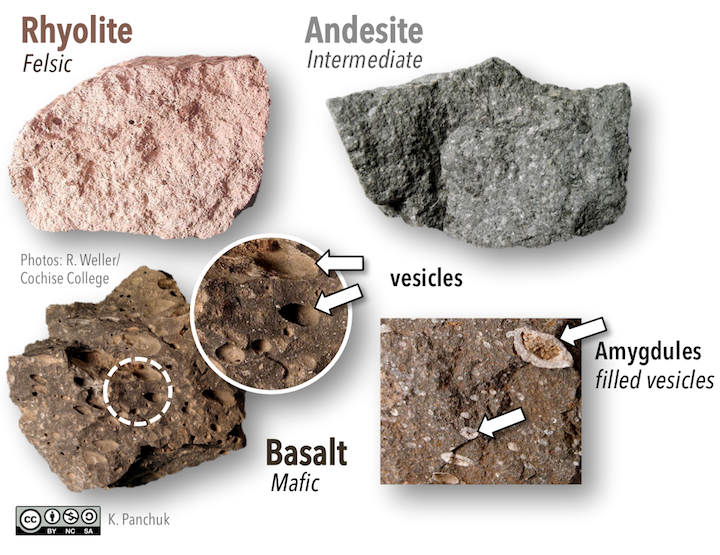
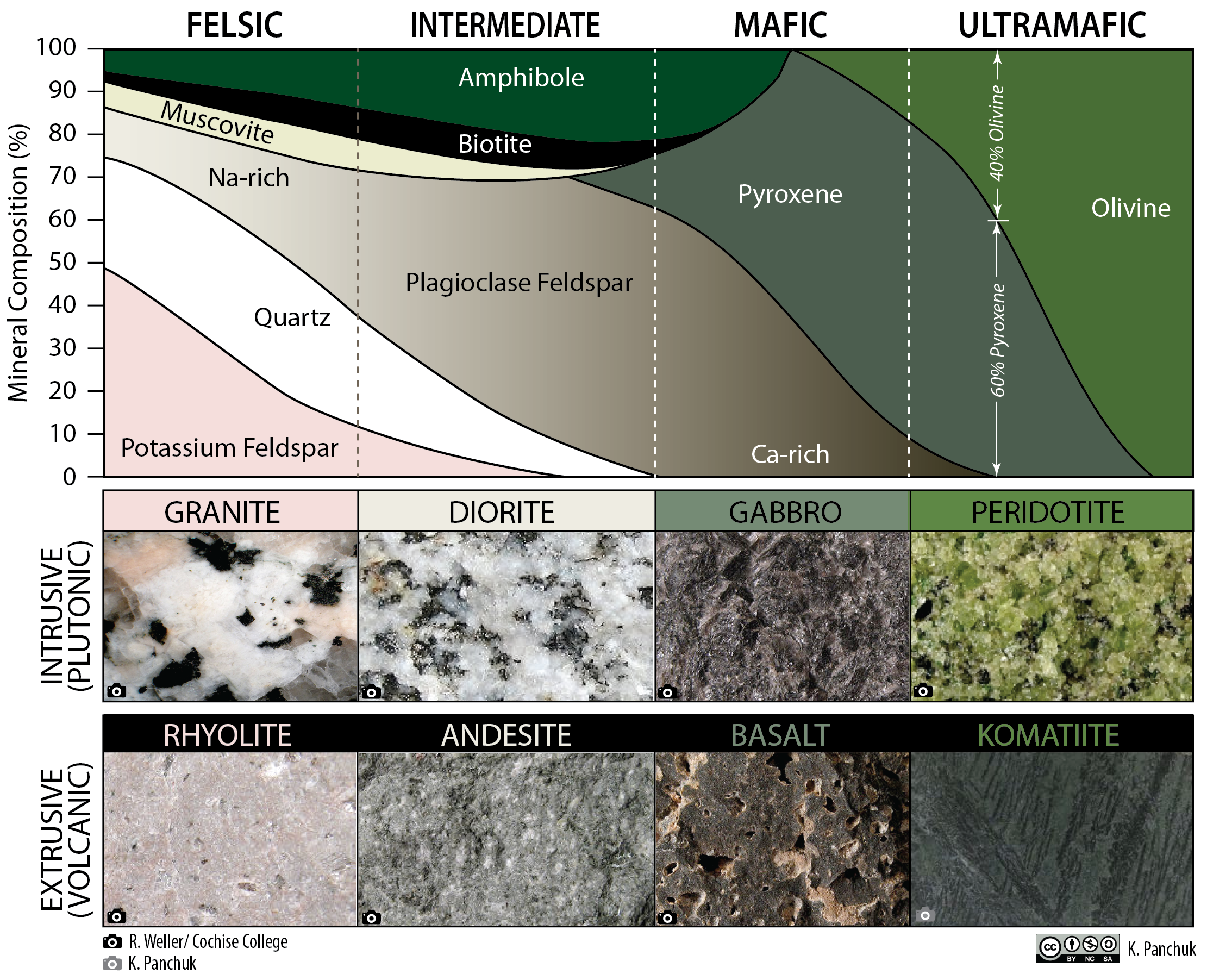
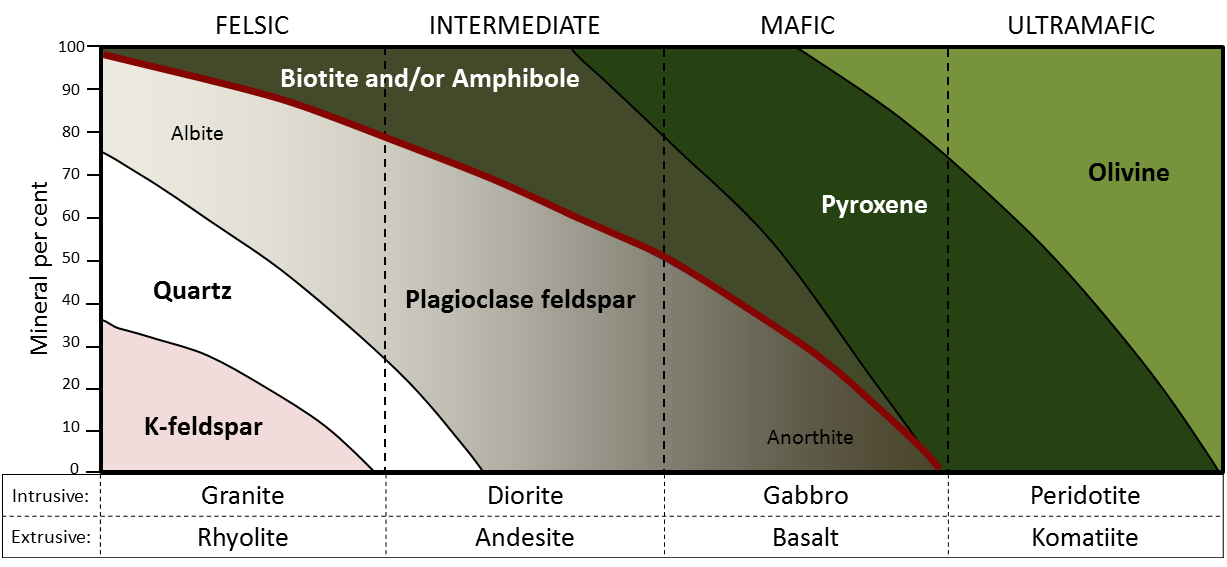
Most of the igneous rocks can be classified as Mafic or Felsic. Intermediate rocks are roughly even mixtures of felsic minerals mainly plagioclase.
Chapter 7 Igneous Rocks Physical Geology
Determine the identity of each rock.
. Because the sample of igneous rock formed on Earths surface it is extrusive. Igneous rock that forms from lava that cools quickly on Earths surface is known as extrusive igneous rock. This rock is extrusive and also known as volcanic rock.
Because its composed of mostly light-colored minerals it is likely felsic. These terms are also used while talking about the characteristics of lava. Texture refers to the size and arrangement of the.
In what type of igneous feature would you find rocks with. Explain in your own words how igneous rocks are classified. The term used to describe the composition of igneous rocks that are light in color less dense and rich in elements like potassium aluminum silicon and sodium.
Thus scientists divide igneous rocks into two different categories. Derived from the words magnesium and ferric Fe is the chemical symbol for iron to describe an igneous rock having abundant dark-colored magnesium- or iron-rich minerals such as biotite pyroxene. Ultramafic rocks are dominated by olivine andor pyroxene.
Rock texture with crystals that are invisible without magnification. 10 points La primera nok Step 2. A very hard natural igneous rock formation of visibly crystalline texture formed essentially of quartz and orthoclase or microcline and used for building and for monuments 2.
Type of dark volcanic rock. Yosemite National Park is a classic example. Igneous Rocks by Composition.
This liquid-like rock called magma is released. Igneous rocks that form beneath the Earths surface or in the Earth. Which of the following igneous rocks contains no mineral crystals.
What is the term used to describe a very large widespread and deep intrusive body of igneous rock. Igneous rocks are classified according to their mineral content. Derived from the words feldspar and silica to describe an igneous rock having abundant light-colored minerals such as quartz feldspars or muscovite.
Igneous rocks are classified according to their texture and composition. Phaneritic aphanitic porphyritic glassy pyroclastic and pegmatitic. OTHER C OMMON TERMS Melanocratic mesocratic leucocratic synonymous with dark- medium and light- coloured indicate the colour index of a rock and hence the relative proportions of dark- to light-coloured mineralsm the boundaries are.
Mafic rocks are dominated by plagioclase and pyroxene even if you cant see them with the naked eye and smaller amounts of olivine. How can you tell something about the place of formation of an igneous rock just by looking at it. Composition refers to both the types of minerals within a rock and the overall chemical makeup of the rock the two are obviously related.
A general concept that marks divisions or coordinations. Beside above what are the two classification of igneous rocks. Mafic and Felsic are not common English language words.
Igneous rocks make up most of the rocks on Earth. Classify the rock as either intrusive or extrusive and identify another word used to describe this type of rock. Unyielding firmness or endurance.
These are terms that are used by geologists to describe igneous rocks based upon their silica content. Crystallized at depth from intermediate-composition magma then rose to the surface and became a lava flow. The outer boundary of an artifact or a material layer.
What words describe igneous rocks. The two main types of igneous rocks are plutonic rocks and volcanic rocks. There are six main types of textures.
Other igneous rock forms from lava that cools quickly on Earths surface. These minerals are lighter in. Most igneous rocks are buried within the crust and covered with sedimentary rock or are buried beneath ocean water.
Felsic refers to feldspar and silica-quartz minerals. Felsic and mafic are two words used to describe the chemical composition of igneous rocks. How do you describe the composition of a plutonic igneous rock.
In the first column describe in your own words the overall color of each rock. Plutonic rocks are formed when magma cools and solidifies underground. Use your own words to answer the following questions 1.
Once it is above ground it is called lava and eventually it cools to become fire rock or igneous rock. Type of hard igneous rock. Igneous rocks formed on the surface cool down in just a matter of a few hours.
I can describe how geologists use color to separate igneous rocks into compositional groups. In some places geological processes have brought intrusive igneous rocks to the surface. Another word for extrusive is volcanic.
Regardless of how volcanoes release this hot molten material it is a sign of new birth in the rock cycle. An igneous rock that has a medium-gray fine-grained groundmass with large crystals of plagioclase. In the second column assign the corresponding igneous composition to each rock 10 points Step 3.
This video describes how hot magma is converted to igneous rocks one of the three major groups of rocks on Earth. I can classify common igneous rocks on the basis of texture and composition. Molten rock or magma that erupts from volcanoes or fissures in the Earths surface.
List the rock-forming minerals. A serious disagreement between two groups of people. Answercalcite gypsum feldspar pyrite feldspars gold quartz diamond amphiboles micas olivine garnet calciteand pyroxenes.
Which of the following words could be used to describe portions of a rock with a porphyritic texture. Rock formed when hot liquid rock or magma cools and solidifies.
3 4 Classification Of Igneous Rock Physical Geology 2nd Edition

Igneous Rock Classification Geology Geology Teaching Earth Science Lessons
7 3 Classification Of Igneous Rocks Physical Geology First University Of Saskatchewan Edition


Comments
Post a Comment